Our standards
What a premium transfer should meetLicensed driver-guides, inspected vehicles, honest times
A safari transfer is five or six hours in a stranger’s vehicle on Kenya’s busiest roads. These are the standards we hold ourselves to, with the Kenyan regulations behind them, so you can hold any operator to the same.
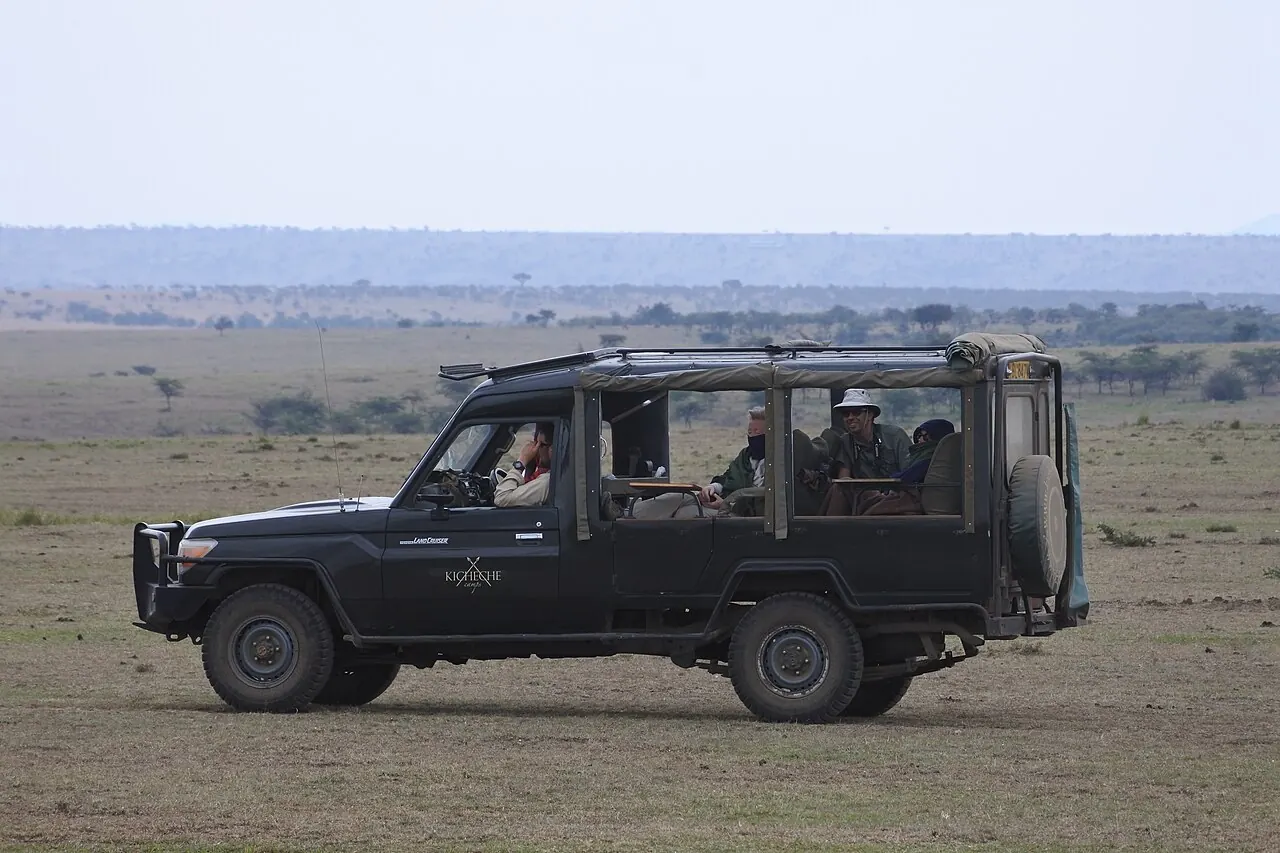
Photo: flightlog / Wikimedia Commons, CC BY 2.0

What does Kenyan law require of a tourist transfer?
Kenya regulates tourist transfers under the National Transport and Safety Authority (Operation of Tourist Service Vehicles) Regulations, 2015 (Legal Notice 20 of 2015). The operator needs an NTSA tourist service vehicle licence and a Tourism Regulatory Authority tour operator’s licence; every driver needs a driving licence for the class of vehicle, a PSV licence and a TRA driver-guide licence.
- Operator (regulations 4–7): NTSA licence, TRA tour operator licence, a code of conduct, a documented safety management system, a complaints procedure, a fleet management system recording speed and location with 30 days of stored data, a passenger manifest, and the company name and approved identification mark on the vehicle.
- Driver (regulation 8): a valid driving licence for the vehicle class, a valid Public Service Vehicle licence and a valid tourism driver-guide licence from the TRA.
- Vehicle (regulations 6 and 12): a valid NTSA inspection certificate, third-party insurance with a licensed insurer, and a speed governor under Legal Notice 217 of 2013.
Source: Kenya Law, LN 20 of 2015, as consolidated to 31 December 2022; the Kenya Professional Safari Guides Association’s legal advice page on TRA and NTSA licensing.
Who will drive us?
Your driver is a driver-guide: licensed by the TRA as a guide, not only by NTSA as a driver. On a five-hour transfer that matters. A guide can tell you why the Rift Valley floor looks the way it does from the Mai Mahiu viewpoint, which Maasai trading centre is on market day, and what the giraffes by the Narok road are doing there.
- Experienced on the safari roads they drive: the Mara road, the Mombasa Road and the A2 north.
- Fluent English; ask if you need another language.
- Trained to drive to the conditions, not the clock: no night driving in the parks, no overtaking on the escarpment.
How are the vehicles kept?
Both our vehicles are Toyotas, the make Kenya’s safari industry runs on because parts and mechanics are everywhere from Narok to Isiolo. They are serviced on the maker’s schedule, inspected by NTSA, fitted with a speed governor and GPS tracking, insured with a licensed insurer, and cleaned between every transfer. See our vehicles.
Why do we publish two drive times?
Because the one you see in a map app is not the one you will drive. We publish the free-flow engine figure and the time we actually plan, built from the road distance on OpenStreetMap, the road sections on the Kenya Roads Board network and real Nairobi traffic. If we say a transfer takes 5¾ hours, we have planned for it to.
How can you check a transfer company?
- Ask for the TRA licence numberand check it with the Tourism Regulatory Authority.
- Look for the NTSA licence sticker and the company nameon the vehicle; tourist vehicles must display both.
- Ask the driver for the PSV and driver-guide licences.Licensed guides carry them.
- Get the price in writingbefore you travel, with what is and is not included.
Book your transfer
Send your pick-up, drop-off, date and the number of travellers. We confirm the vehicle, the driver-guide and the price in writing, worked out from the road distance.